
Ronnie Pritchett's golf club patent is filed.

The Ashdon Story
ABOUT ASHDON GOLF
BUILT WITH A REASON FOR EVERY DECISION.
Ashdon Golf was founded on one conviction: a putter's geometry should be its engineering — not its packaging.
Founder
RONNIE
PRITCHETT
Ronnie Pritchett grew up in a small town in north Georgia, where he spent his teenage years working alongside his father surveying land — staking property lines and making sure building sites were level. That work trained his eye to see straight lines and subtle angles. The first time he stood on a putting green, reading a putt came naturally.
He was small for his age and couldn't keep up off the tee, so he learned to win around the greens: miss a green, chip it close, make the putt. He went on to play college golf, became an assistant golf professional after graduating, and has been in the golf business ever since.
Early on, he watched Jack Nicklaus practice at the Atlanta Classic, studied the way he held the putter, and switched to the reverse-overlap grip the next day. He has never changed it.
The one thing that gave him trouble was keeping the putter face square to his line through the stroke. So he set out to give the putter more stability — and the triangle and the circle became the Bermuda Triangle and Roundabout designs. He named the company for his two children, Ashley and Brandon.

"I didn't want to build a putter that looked premium. I wanted to build one that was."
— RONNIE PRITCHETT, FOUNDER

The Problem Ronnie Set Out to Solve

Ronnie Pritchett — 300 Yards, Dead Center

In the Press
FEATURED IN
GOLF MAGAZINE
In its January 2012 issue, GOLF Magazine told the story of the inaugural U.S. Putting Tour Championship at The Crossings at Carlsbad, where 227 golfers from across the country competed for a $10,000 first prize and the title of “America's Best Putter.” Ashdon Golf was the event's presenting sponsor.
Ronnie started the 36-hole final three shots back, finished regulation tied with The Crossings' director of instruction, and won the sudden-death playoff by aiming three feet left of the hole on a 25-foot breaking putt and watching it trickle in.
“What's great about putting is that not everybody can hit it 300 yards. But everybody can hit it 20 feet. We're all equal on the dance floor.”
— RONNIE PRITCHETT, TO GOLF MAGAZINE
Connell Barrett, “Could You Make This Putt for $10,000?” GOLF Magazine, January 2012, pp. 70–73.
WHAT WE
STAND FOR
01
PRECISION OVER POPULARITY
Ashdon doesn't chase trends. Every design decision starts and ends with a single question: does this make the putter perform better? If it doesn't, it doesn't ship. The geometry, the materials, the weighting — all of it is earned, not aesthetic.
02
ENGINEERING AS ART
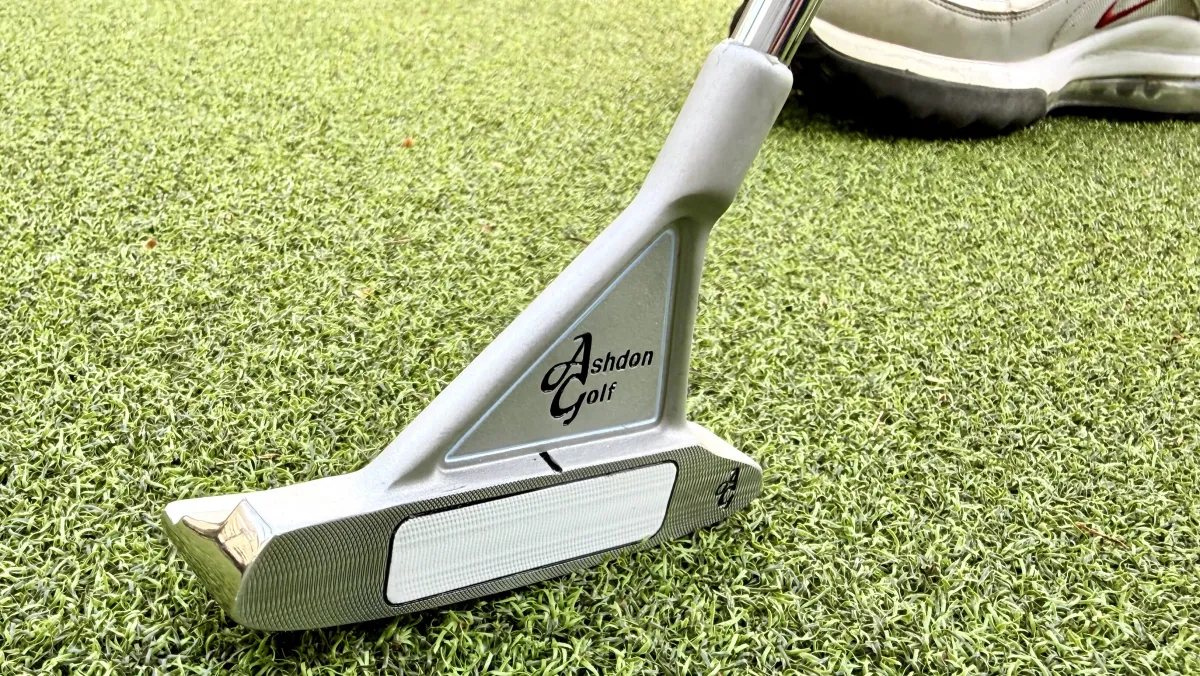
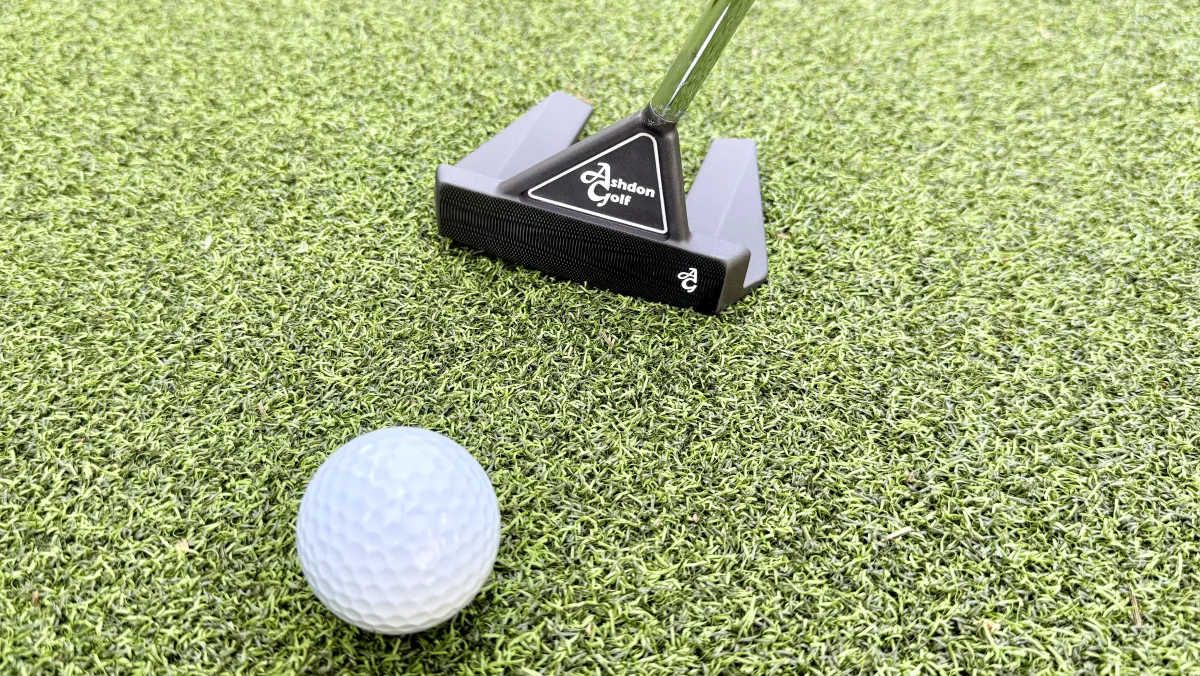
The most honest thing a putter can do is look exactly like what it is. Ashdon putters wear their engineering on the outside — visible triangles, arcs, and curves that aren't decorative. The shape is the technology. On the Roundabout Series, the circular face measures exactly 1.6 inches — the same height as a golf ball — so alignment, contact, and roll aren't features added to the design. They are the design.
03
BUILT FOR THE SERIOUS PLAYER
Not for beginners looking for a magic fix. Not for collectors looking for a status symbol. For golfers who have studied their stroke, who understand the difference between forgiveness and feel, and who want a putter that matches their commitment to the game.
04
RELENTLESS REFINEMENT
No Ashdon model is ever considered finished. Player feedback, tour testing, and ongoing materials research mean every generation of each design is better than the last. The goal is never a perfect product — it's a better one.
Putters That Make Golfers Better Putters
"Make golfers better putters — by adding stability that keeps every putt on your intended line."
— OUR MISSION
The Record
ASHDON GOLF AND THE EVOLUTION OF
GEOMETRIC PUTTER DESIGN
Some golfers compare Ashdon's Bermuda Triangle putters to newer geometric or truss-style putters from larger manufacturers. The visual comparison is understandable. The timeline is not.
Ashdon's geometric putter story was already public years before the modern wave of high-MOI, geometric, and truss-style putters became a mainstream category. A 2007 Golf Wire article described Ronnie Pritchett's work with the Bermuda Triangle T-180 and Round-A-Bout G-360, including his goal of creating a putter that did not twist and turn during the putting stroke.
Ashdon Golf History
The Los Angeles Times reports on Ronnie Pritchett's Bermuda Triangle Putter.
U.S. Patent US5599241A is published.
Ashdon Golf begins with the development of the Bermuda Triangle T-180.
Rankmark's 185-golfer test scores the Round-A-Bout among its nine highest-rated of 27 manufacturers.
Ronnie Pritchett wins the inaugural U.S. Putting Tour Championship, presented by Ashdon Golf, with a Round-A-Bout from a field of 227. GOLF Magazine covers the win in January 2012.
US5599241A reaches the end of its term. The design stays in production.
Ashdon continues building around its original triangle and circle design philosophy.
PING DOC putters show the industry experimenting with larger high-MOI mallet shapes.
TaylorMade Spider helps bring high-MOI mallet putters into the mainstream.
Odyssey Ten continues the modern high-MOI mallet movement.
TaylorMade Truss introduces visible structural support near the hosel/topline.
Industry Movement — Context
Ashdon Golf History
Ronnie Pritchett's golf club patent is filed.
The Los Angeles Times reports on Ronnie Pritchett's Bermuda Triangle Putter.
U.S. Patent US5599241A is published.
Ashdon Golf begins with the development of the Bermuda Triangle T-180.
Rankmark's 185-golfer test scores the Round-A-Bout among its nine highest-rated of 27 manufacturers.
Ronnie Pritchett wins the inaugural U.S. Putting Tour Championship, presented by Ashdon Golf, with a Round-A-Bout from a field of 227. GOLF Magazine covers the win in January 2012.
US5599241A reaches the end of its term. The design stays in production.
Ashdon continues building around its original triangle and circle design philosophy.
Industry Movement — Context
PING DOC putters show the industry experimenting with larger high-MOI mallet shapes.
TaylorMade Spider helps bring high-MOI mallet putters into the mainstream.
Odyssey Ten continues the modern high-MOI mallet movement.
TaylorMade Truss introduces visible structural support near the hosel/topline.
"Ashdon did not follow the geometric putter trend. Ashdon was early to it."
Sources include U.S. Patent US5599241A (expired), Rankmark's March 2007 putter test results, GOLF Magazine (January 2012), U.S. Trademark Registrations 2,886,062, 3,447,118, 4,489,886 and 6,242,947, Ashdon Golf company history, and public product launch history from major putter manufacturers.
THE ASHDON
STORY
THE BEGINNING
A PROBLEM WORTH SOLVING
Ronnie Pritchett had played competitive golf long enough to know that most premium putters were engineered around tradition, not physics. The shapes looked expensive. The performance was inconsistent. He set out to design something different — a putter whose geometry was the engineering, not the decoration.
THE BREAKTHROUGH
GEOMETRIC MASS DISTRIBUTION
The insight that drove Ashdon's founding was simple: place mass exactly where it needs to be, and let the shape follow. The result was the Triangle Frame architecture — a design that concentrated weight at the extreme heel, toe, and back of the head, creating a moment of inertia that no conventional shape could match at the same weight.
THE LINEUP
FOUR SERIES, ONE PHILOSOPHY
From the Roundabout Series to the Bermuda Triangle T-180, each Ashdon model applies the same geometric mass distribution principle to a different stroke profile and player preference. One brand. One engineering philosophy. Multiple expressions of the same relentless standard.
TODAY
TRUSTED ON TOUR AND IN HAND
Ashdon putters have found their way into the bags of serious amateurs and touring professionals who prioritize performance and want something that stands apart from the mainstream. The mission hasn't changed: build the most technically advanced putter available, and fit it to the player who deserves it.
THE PUTTER
PROVES IT.
Every claim Ashdon makes about engineering and performance is in the putter itself. Pick one up and feel what the geometry does.