
Head Style · Mallet
Mallet Putters,
Built for Forgiveness
A mallet carries more mass, further from the center — and that mass is what makes it forgiving. Ashdon's mallets turn it into the largest sweet spot we make.
The most forgiving putter we've tested.* Our geometry, first patented in 1994, cuts torque by 87%, so heel and toe strikes hold their line.
A mallet putter has a wider, heavier head that positions more mass away from the center. Ashdon's mallet designs — including the G-360 M5 and M6 — use geometric mass distribution to place weight at the extreme heel, toe, and back of the head, creating a moment of inertia that resists twisting on off-center hits. Higher MOI means straighter roll, more consistent distance, and fewer three-putts from slight misses.
Mallets are traditionally suited to players with a straight-back, straight-through stroke who want stability over feel. But Ashdon's geometry resists torque naturally, so the face stays square at impact regardless of your style. You get the forgiveness of a mallet without giving up a square, on-line strike.
Every head is CNC-milled from solid 303 stainless steel and 6061 billet aluminum, holding tolerances tighter than ±0.001″. Every model is designed to conform to USGA and R&A rules. If you want the largest, most forgiving head Ashdon makes, the mallet line is where to start.
*Based on Ashdon's own torque testing against conventional putters.
MOI, Plainly
What Forgiveness Actually Means
"Forgiving" gets used loosely in golf equipment. On a putter it has a specific, physical meaning, and it is worth understanding because it tells you whether a mallet will help your putting or just change how it looks.
MOI — moment of inertia — is a measure of how hard something is to twist. Push mass further from the center of an object and it becomes harder to rotate. That is why a tightrope walker carries a long pole, and it is why a wide mallet with weight in the heel, toe and back resists turning more than a compact blade of the same weight.
The moment that matters is the mishit. Strike the ball toward the toe and the head wants to rotate around its own center, opening the face a fraction at the instant of contact. That fraction is what sends the putt offline and takes speed off the roll. A higher-MOI head turns less, so the ball leaves closer to your intended line and closer to your intended pace — the difference between a tap-in and a knee-knocker.
None of that makes a mallet automatically the right choice. Higher MOI also means less feedback, because a head that twists less tells you less about where you struck it. That is a genuine trade, not a marketing caveat.
| Head style | Where the mass sits | On a mishit | Suits |
|---|---|---|---|
| Compact blade | Concentrated near the center | Turns most on a mishit | Arcing stroke, feel-first players who read their own contact |
| Compact mallet | Moderately spread | Middle ground | Slight arc, players who want stability without losing all feedback |
| Full mallet | Pushed to heel, toe and back | Turns least on a mishit | Straight-back, straight-through stroke; anyone missing the center often |
If you regularly miss the center of the face, MOI is the single most useful thing to buy. If you strike it consistently and want to feel what you did, you are paying for stability you do not need. The fitting guide sorts which camp you are in, and the blade page covers the other side of the trade.
The Mallets
High-MOI Heads, Maximum Forgiveness
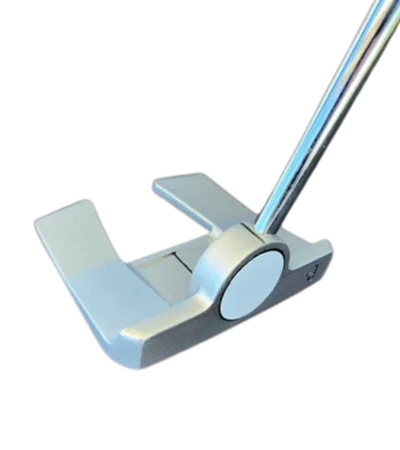
Roundabout Ballistic Missile G-360 M6 Mallet
$349.95
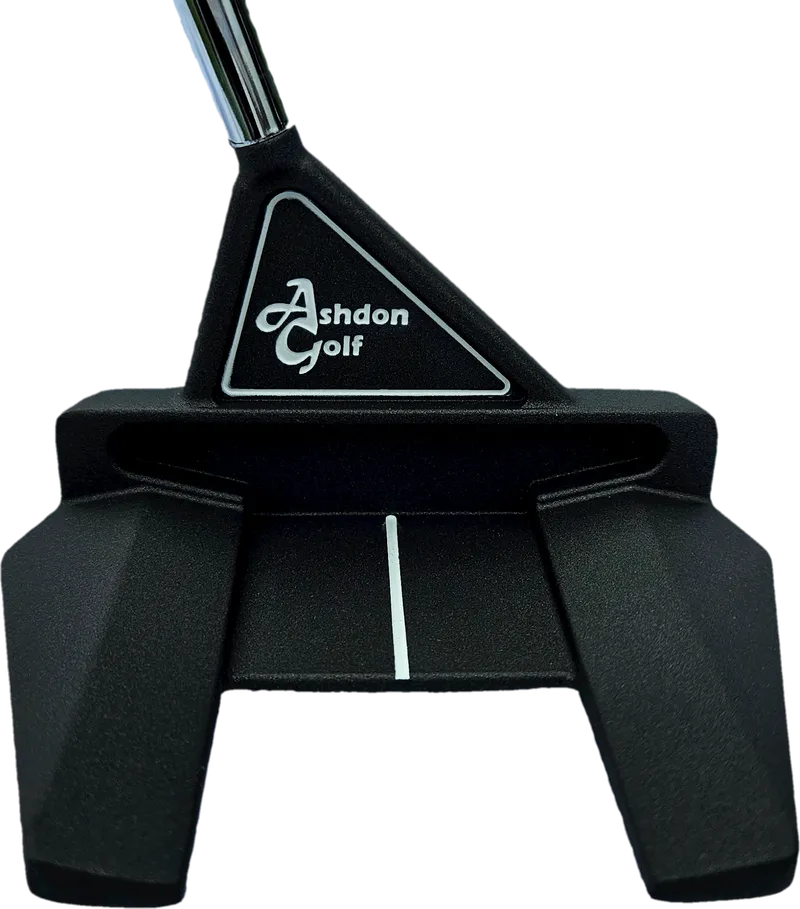
Bermuda Triangle Ballistic Missile G-360 M5 Mallet
$349.95
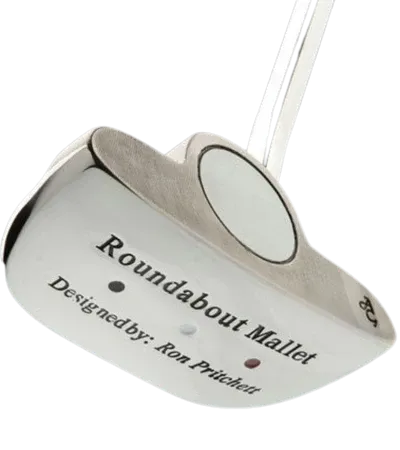
Roundabout Mallet
$299.95
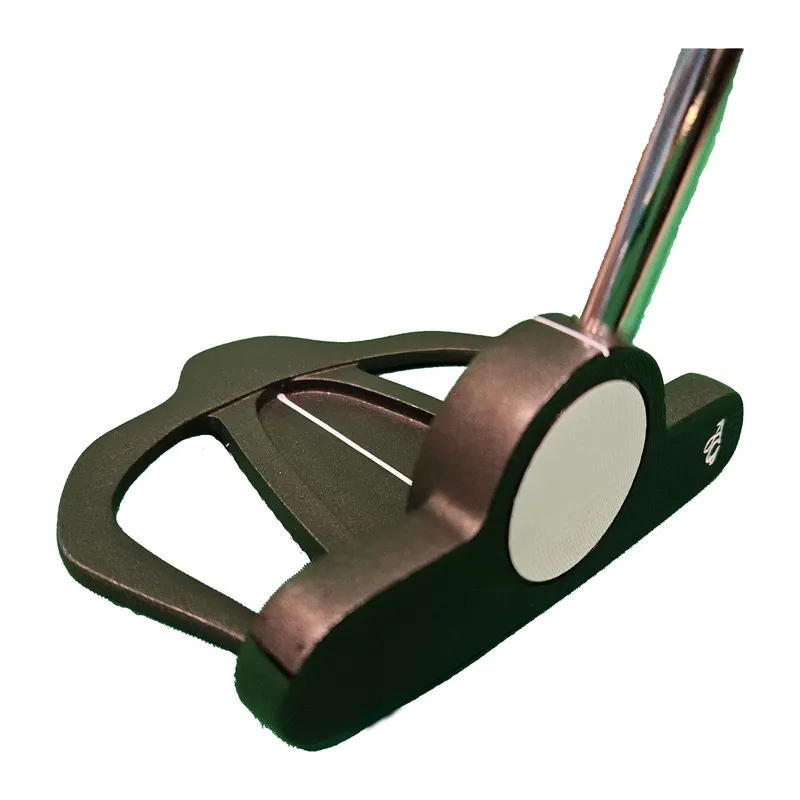
Roundabout Guided Missile M3 Mallet
$299.95
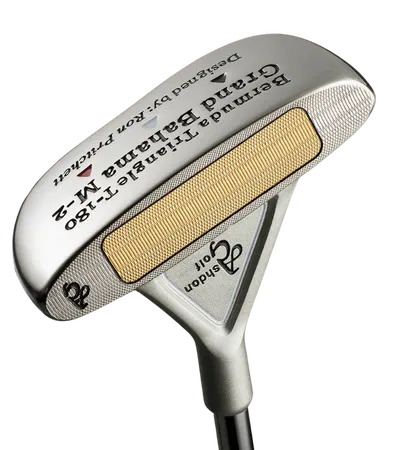
Bermuda Triangle Grand Bahama Mallet
$299.95
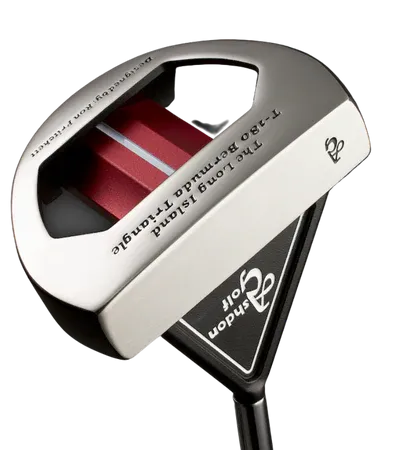
Bermuda Triangle Long Island Mallet
$299.95
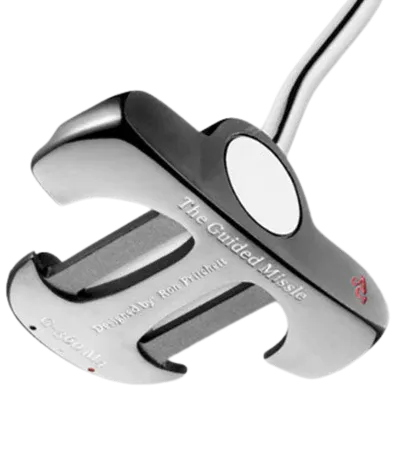
Roundabout Guided Missile M4 Mallet
$299.95
Mallet Putters, Answered
What's the difference between a mallet and a blade putter?+
Blades have a narrow, traditional head profile and typically suit players with a more arcing stroke. Mallets have a wider, heavier head that positions more mass away from the center, making them more forgiving on off-center hits and better suited to players with a straight-back, straight-through stroke.
Are mallet putters more forgiving?+
Generally, yes. A mallet distributes more mass away from the center of the head, which increases the moment of inertia (MOI) — the putter’s resistance to twisting when the ball is not struck exactly on the sweet spot. Higher MOI means straighter roll, more consistent distance, and fewer three-putts from slight misses.
What is the most forgiving type of putter?+
A full-size mallet. Forgiveness on a putter comes down to MOI — how much the head resists twisting on an off-center strike — and MOI rises as mass moves further from the center of the head. A full mallet, with weight pushed to the heel, toe and back, generally keeps more mass out there than a compact mallet or a blade, so it turns least on a mishit and holds its line and pace best when you miss the center. The trade is feedback: the more forgiving the head, the less it tells you about where you struck it.
Which Ashdon mallet should I choose?+
Ashdon's mallet designs — including the G-360 M5 and M6 — use geometric mass distribution to give you the largest sweet spot Ashdon makes. If you want the most forgiveness, start there. The free fitting guide matches you to a specific model based on your stroke and height.
Are Ashdon mallet putters USGA approved?+
Yes — though the wording deserves a correction. The USGA doesn't approve or endorse equipment; it evaluates clubs for conformance to the Rules of Golf. All Ashdon putters are designed to conform to USGA and R&A equipment rules and are legal for tournament play at all levels. Every mallet in the Roundabout and Bermuda Triangle lines is included. The Roundabout Series geometric head design was first patented in 1994 (U.S. Patent US5599241A, expired 2014).
What is a face-balanced putter?+
Balance the putter shaft across a finger and let the head hang. If the face points straight up at the sky, the putter is face balanced. If the toe drops toward the floor, it has toe hang. Face balancing means the head resists rotating open and closed through the stroke, which is what you want if your stroke travels straight back and straight through. Most mallets are face balanced or close to it.
What does MOI actually mean on a putter?+
MOI stands for moment of inertia, and it is simply a measure of how hard something is to twist. On a putter it describes how much the head resists rotating when you miss the center of the face. It goes up when mass sits further from the center of the head, which is why a wide mallet with weight pushed to the heel, toe and back resists twisting more than a compact blade. The practical effect shows up on mishits: a higher-MOI head turns less on a strike off the toe, so the ball starts closer to your intended line and loses less speed.
Do I lose feel with a mallet?+
You trade some feedback for stability. A compact blade telegraphs exactly where on the face you made contact, which skilled putters use to self-correct. A mallet damps that signal because the head twists less — which is the entire point, but it does mean mishits feel more like good strikes. If reading your own contact matters to you, a compact mallet or a blade will suit you better than a full-size mallet.
What length mallet putter should I use?+
Most golfers play a putter that is too long. The right length puts your eyes over or just inside the ball with your arms hanging naturally and your shoulders level. By height as a starting point: over 6 feet is usually 36 inches, 5 feet 8 to 6 feet is 35 inches, 5 feet 4 to 5 feet 8 is 34 inches, and shorter players are typically 33 inches or less. Posture shifts this, so treat height as the starting point rather than the answer.
Other Categories
Compare Head Styles
Zero-Torque
Geometry that resists twisting — 87% less torque than a conventional putter, so the face stays square.
View Zero-Torque Putters →Blade
The classic narrow profile, rebuilt on Ashdon geometry. Feel players start here.
View Blade Putters →High MOI
Geometric mass distribution that resists twisting on off-center hits.
View High MOI Putters →Not Sure Which Model?
Find Your Fit
The free fitting guide matches you to the right Ashdon mallet based on your stroke type, height, and tendencies.
Get Fitted