The Zero-Torque Category
Zero-Torque Putters,
Built From Geometry
The twist a putter makes at impact is what pushes putts off line. Ashdon's answer is what the industry now calls zero-torque design — a head that reduces torque by 87% and stays square through the stroke.
Most putters are shaped for looks. Ashdon putters are shaped by physics. Traditional putters twist at impact, and that twist — torque — is the single biggest cause of putts that leak to the sides. Ashdon's geometry keeps the face square through the entire stroke, from takeaway to follow-through, reducing torque by 87% versus conventional putters.
The mechanism is shape, not a counterweight bolted on. Triangles and circles are the most structurally efficient shapes in engineering — used in bridges, aircraft, and skyscrapers because they distribute force evenly and resist deformation. The triangle in particular cannot be distorted without changing the length of its sides, so when Ashdon uses triangular geometry to connect the shaft to the head, the connection physically resists twisting. That eliminates the lever-arm effect that causes face rotation in a conventional hosel.
Every head is CNC-milled from solid 303 stainless steel and 6061 billet aluminum, holding tolerances tighter than ±0.001″ — no cast parts, no shortcuts. The result is a putter that keeps the face locked on your intended line, stroke after stroke, and rolls the ball straighter even on mishits. Every model is designed to conform to USGA and R&A rules, and the Roundabout Series geometric head design was first patented in 1994.
Definitions
What "Zero Torque" Actually Describes
Torque, on a putter, is the twisting force that tries to rotate the head around the shaft during your stroke. It exists because on most putters the shaft does not connect through the head's center of mass — it attaches to one side, usually the heel. That offset creates a lever, and a lever under acceleration produces rotation.
The consequence is that the face is quietly rotating open and closed while you swing, independently of anything your hands are doing. A zero-torque design attacks the cause rather than the symptom: change the geometry of the connection so the lever effect is largely removed, and the head stops wanting to rotate in the first place.
This is not the same thing as face balancing, though the two are constantly conflated — including by people selling putters. Face balance is about how the head hangs at rest. Torque is about how it behaves in motion. A putter can be perfectly face balanced and still carry meaningful torque, because the two properties are set by different things.
| Property | What it measures | Set by | Why it matters |
|---|---|---|---|
| Toe hang / face balance | How the head hangs at rest | Where the center of gravity sits relative to the shaft axis | Matching the putter to how much your stroke arcs |
| Torque | How much the head twists during the stroke | How the shaft connects to the head | Keeping the face square through impact regardless of arc |
Why the Triangle
A triangle is the only polygon that cannot change shape without changing the length of one of its sides. Push on a square and it folds into a rhombus; push on a triangle and it either holds or breaks. Bridges, roof trusses, aircraft frames and crane booms all exploit this, for the same reason.
Ashdon connects the shaft to the head through triangular geometry so that the connection resists deformation structurally, rather than relying on added weight to counteract twist after the fact. The head does not need a counterweight bolted to it, because the shape is already doing the work.
The industry now calls this category zero torque, and several manufacturers arrived at truss-style solutions independently through the mid-2020s. Ashdon's version of the idea was first patented in 1994 — the same geometry, a long time before the category had a name.
The Collection
Every Ashdon Putter Is Built This Way
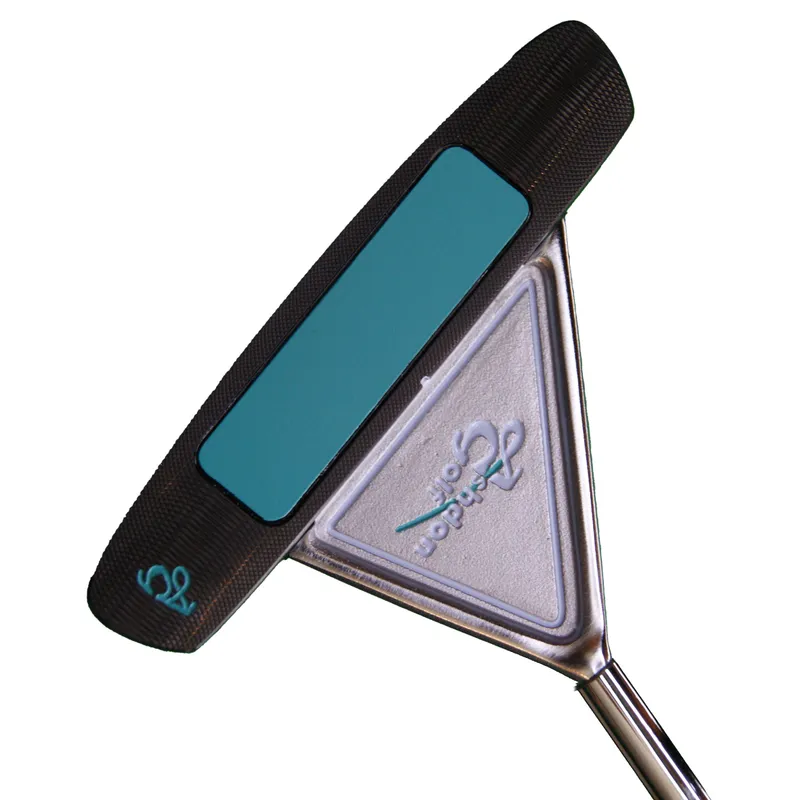
Bermuda Triangle Caribbean Blade
$299.95
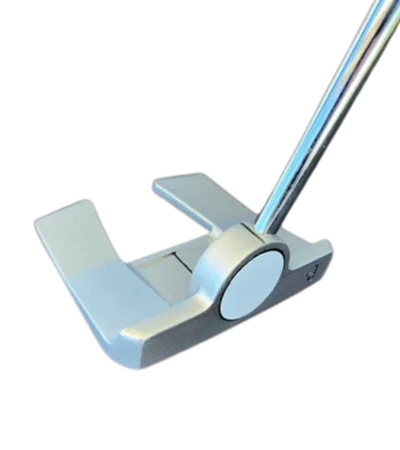
Roundabout Ballistic Missile G-360 M6 Mallet
$349.95
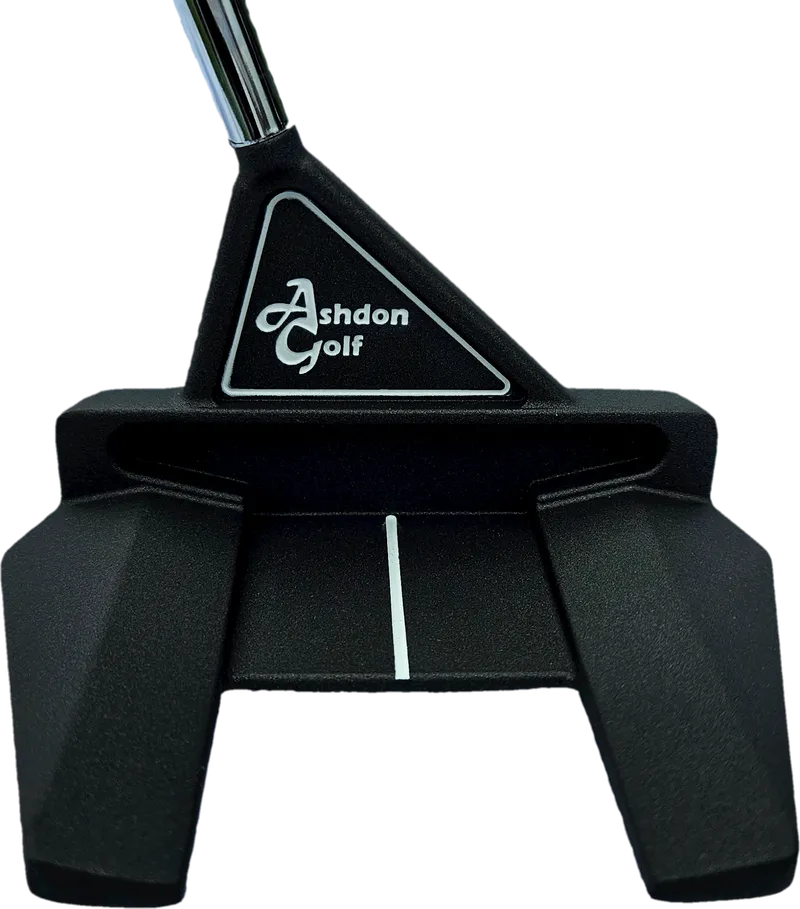
Bermuda Triangle Ballistic Missile G-360 M5 Mallet
$349.95
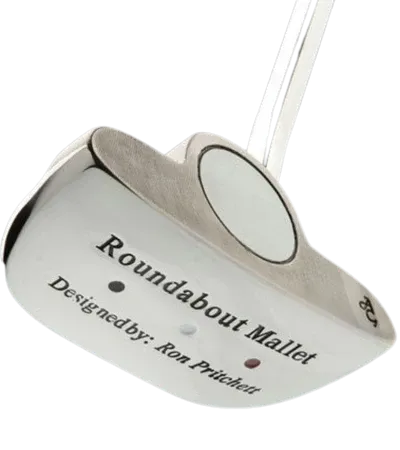
Roundabout Mallet
$299.95
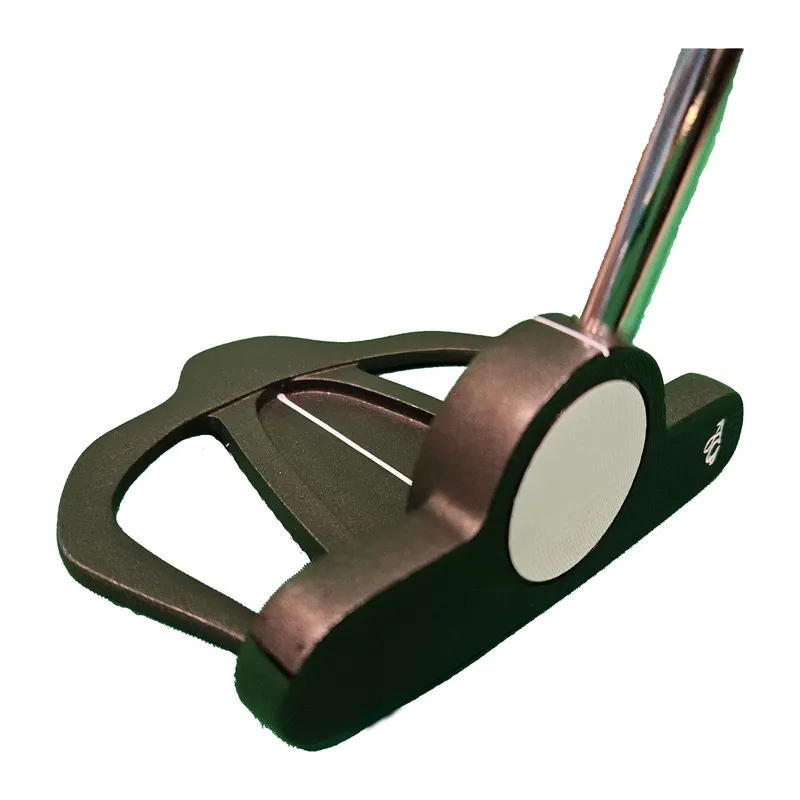
Roundabout Guided Missile M3 Mallet
$299.95
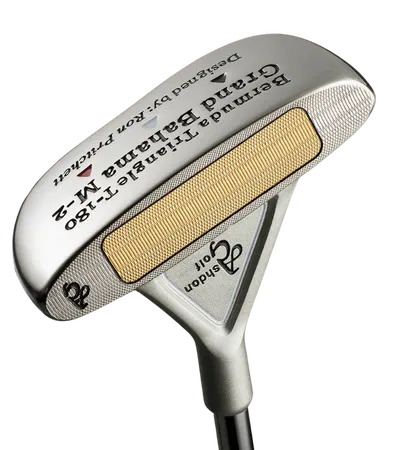
Bermuda Triangle Grand Bahama Mallet
$299.95
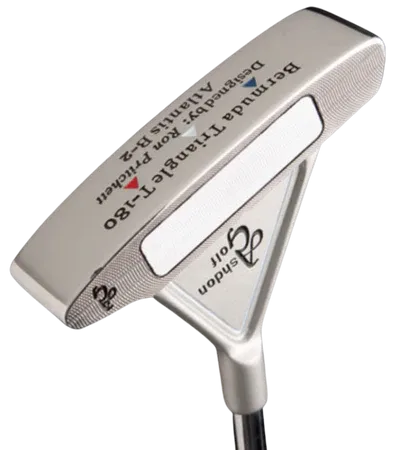
Bermuda Triangle Blade
$299.95
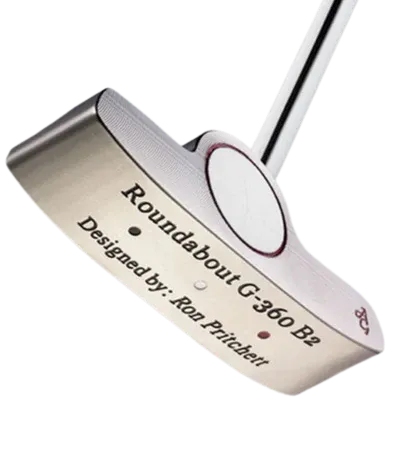
Roundabout Blade
$298.98
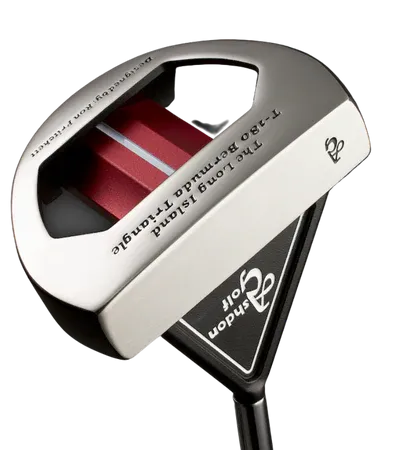
Bermuda Triangle Long Island Mallet
$299.95
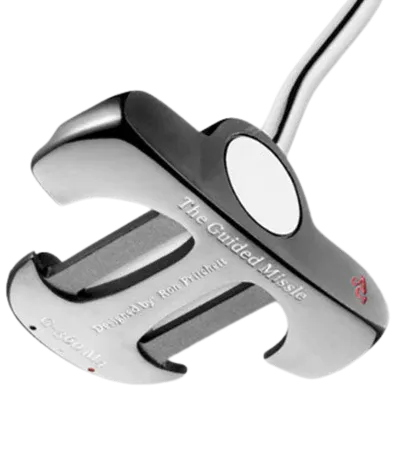
Roundabout Guided Missile M4 Mallet
$299.95
Zero-Torque, Answered
What is a zero-torque putter?+
Traditional putters twist at impact — that twisting force is torque, and it sends the face off your intended line. A zero-torque putter is engineered to resist it. Ashdon reduces torque by 87% versus conventional putters through the geometry of the head itself, keeping the face square from takeaway to follow-through.
How does Ashdon reduce torque by 87%?+
Through shape, not added weight. The triangle is the only geometric shape that cannot be distorted without changing the length of its sides. Ashdon connects the shaft to the head using triangular geometry, creating a connection that physically resists twisting — eliminating the lever-arm effect that causes face rotation in conventional hosel designs.
Will a zero-torque putter work with my stroke?+
Yes. Ashdon putters are engineered to work with any stroke — straight-back-straight-through or arc. Because the geometric head design resists torque naturally, the face stays square at impact regardless of your style. If you are unsure which model fits, the free fitting guide matches you by stroke type and height.
Are Ashdon zero-torque putters USGA approved?+
Yes — with one clarification on the wording. The USGA doesn't approve or endorse equipment; it evaluates clubs for conformance to the Rules of Golf. All Ashdon putters are designed to conform to USGA and R&A equipment rules and are legal for tournament play at all levels. That applies to the zero-torque models the same as every other head in the line. The Roundabout Series geometric head design was first patented in 1994 (U.S. Patent US5599241A, expired 2014).
Is zero torque the same as face balanced?+
No, though they are related and often confused. Face balancing describes how the head hangs when you balance the shaft on a finger — face up means face balanced, toe down means toe hang. Zero torque describes something different: how much the head wants to rotate around the shaft axis during the stroke, which is governed by where the shaft meets the head. A putter can be face balanced and still carry significant torque. The two are separate properties, and both are worth checking.
Do zero-torque putters suit every stroke?+
They suit most strokes, but they change what the stroke has to do. Because the head resists rotating on its own, a zero-torque putter rewards a stroke where the shoulders do the work and the hands stay quiet. Golfers who actively rotate the face with their hands through impact — a deliberate release — sometimes find the head fights them at first. It usually takes a few sessions to recalibrate rather than a change of putter.
Why did zero torque suddenly become a category?+
Zero-torque and truss-style designs moved into the mainstream through roughly 2023 to 2025, when several major manufacturers launched competing models and tour players adopted them visibly. The underlying idea is considerably older. Ashdon has been building shaft-to-head geometry that resists twisting since the design was first patented in 1994, well before the category had a name.
Will a zero-torque putter fix a push or a pull?+
It addresses one specific cause of them. If your putts leak offline because the face is rotating open or closed through impact, a head that resists that rotation will help directly. If they leak because of your aim, your read, or your path, a zero-torque putter will not fix it — it will just make the miss more repeatable. Worth diagnosing which you have before changing equipment.
Other Categories
Compare Head Styles
Mallet
More mass, further from the center. The largest, most stable head Ashdon builds.
View Mallet Putters →Blade
The classic narrow profile, rebuilt on Ashdon geometry. Feel players start here.
View Blade Putters →High MOI
Geometric mass distribution that resists twisting on off-center hits.
View High MOI Putters →Not Sure Which Model?
Find Your Fit
The free fitting guide matches you to the right Ashdon putter based on your stroke type, height, and tendencies.
Get Fitted